· 6 min read
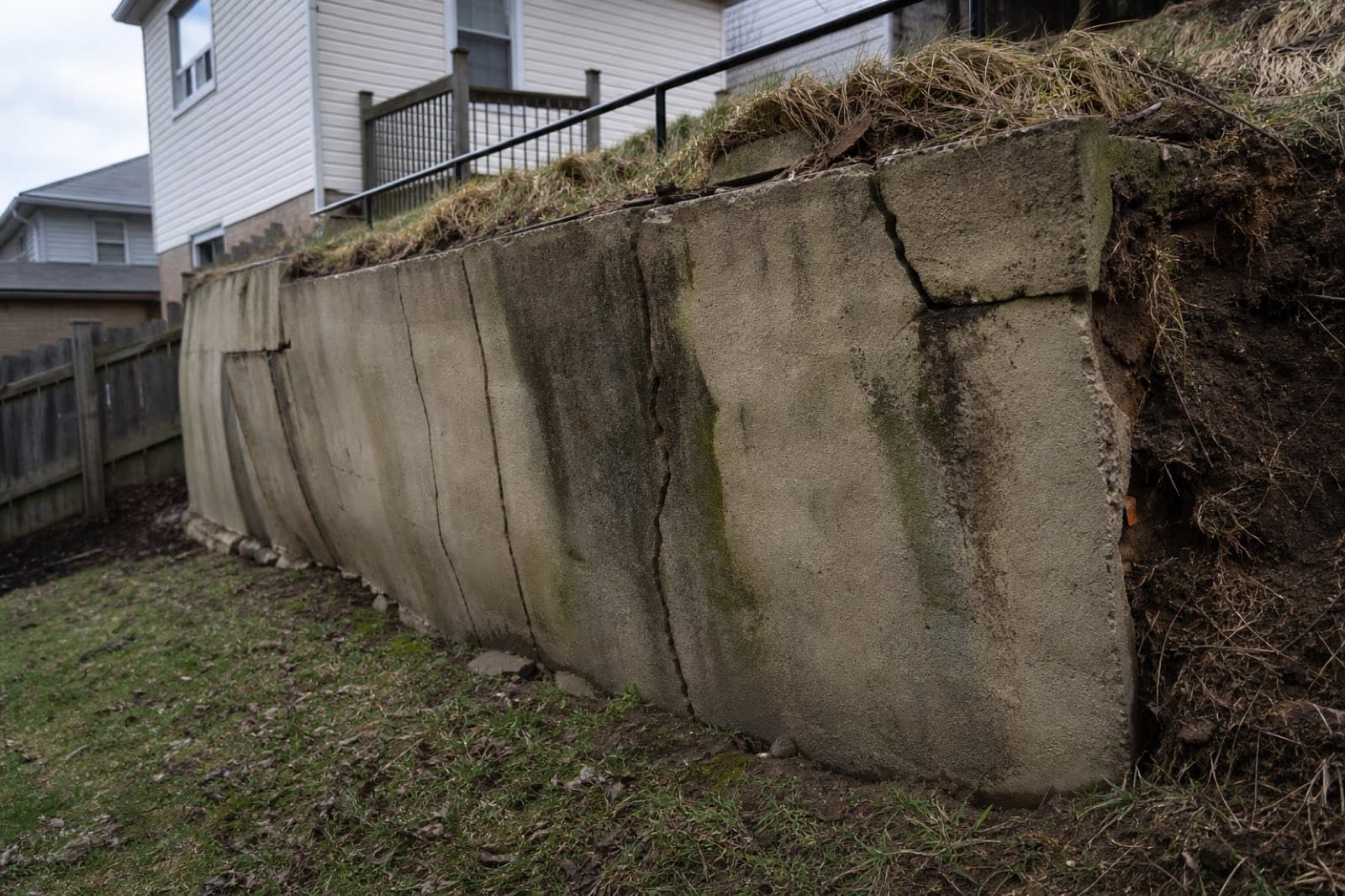
If you've got a retaining wall in Langley that's starting to lean, crack, or bulge, you're not alone. Forge Langley Retaining Wall Contractors gets called out to failing walls all over the Township, and almost every single one comes down to the same culprit. It isn't bad stone. It isn't an earthquake. It's water.
Water is the enemy of every wall
A retaining wall holds back soil. When it rains, and around here it rains a lot, that soil soaks up water and gets heavy. If the water has nowhere to drain, it builds up behind the wall as hydrostatic pressure. That pressure pushes out, hard, and it never lets up. Given enough wet winters, even a solid-looking wall will start to tip, crack, or bulge forward.
Langley's soil makes it worse. A lot of the ground here, especially up in Walnut Grove and the older parts of Willoughby, is heavy clay or glacial till that holds water instead of letting it drain. Pile that soil behind a wall with no drainage and you've built a dam, not a retaining wall.
The parts you can't see are the parts that matter
When people picture a good retaining wall, they think about the stone or the block on the face. But the parts that decide whether a wall lasts five years or fifty are the ones you never see once the job is done:
A proper footing. The base needs to be excavated to depth and sit on compacted granular fill, below the frost line. A wall built on soft or uneven ground settles and cracks no matter how nice the face looks.
Drainage behind the wall. There should be a perforated drain pipe (weeping tile) at the base, surrounded by clear crushed rock, wrapped in filter fabric so soil doesn't clog it. That gives water a path to escape instead of building up.
An outlet. The drain has to actually go somewhere, daylighted to a lower point or tied into a storm system. A drain pipe that dead-ends does nothing.
Why the cheap walls don't last
Plenty of walls in Langley were put up fast and cheap by crews who stacked block or timber straight against the dirt with no drainage and no real footing. They look fine the first year. Then the rain does its work, and within a few winters they're leaning. We end up tearing a lot of those out and rebuilding them right.
Dry-stacked block kits from the big-box store have the same problem. They're fine for a low garden edge, but used as a real retaining wall without drainage and reinforcement, they bow out and come apart.
How we build a wall that holds
At Forge Langley Retaining Wall Contractors we're masons, so we build in stone, brick, rock, and reinforced block. Whatever the material, the approach is the same: dig a proper footing, build in full drainage behind the wall, reinforce it for the height it's holding, and tie the drain to a real outlet. For taller or load-bearing walls we bring in an engineer for the design and pull the permit.
It's not the glamorous part of the job, but it's the reason our walls are still standing straight long after the cheap ones have failed.
Got a wall that's already moving?
If your wall is leaning or cracking, don't wait for it to come down. Caught early, a lot of walls can be saved by adding the drainage that was missing. Caught late, it's a full rebuild. Send us a few photos through our contact form and we'll tell you honestly which one you're looking at.