· 8 min read
Homeowners often ask how tall we can build. The honest answer from Forge Langley Retaining Wall Contractors is as tall as the site and the engineer allow. There's no single number that covers every yard. There is a point where a garden wall becomes a structure, and that point shows up fast on Langley's sloped lots.
The metre mark most people hit
Around one metre, or about four feet, a wall stops being a landscape edge and starts being a structure. That's when soil pressure gets serious, when a driveway or patio above the wall matters, and when most Fraser Valley cities want a design and a permit. We build well past that height. We just don't guess our way there.
A 3-foot wall holding a flower bed is one job. A 6-foot wall holding a parking pad is another. Same neighbourhood, completely different build.
Why tall cheap walls fail
Big-box interlocking kits get stacked higher than they should, with no geogrid, no compacted lifts, and no drain. They look fine the first summer. Then the clay gets wet, the mass behind the wall grows, and the face starts to belly out. We tear a lot of those down in Walnut Grove and the older Willoughby pockets.
Timber walls have the same problem plus rot. Once the sleepers go soft at the base, height works against you. The taller the wall, the harder it falls.
How we build height so it stays
Taller walls get a deeper footing, steel, grouted cores or poured concrete, and geogrid layers tied back into the slope. Drainage is not optional. On a 5-foot wall in Langley clay, water is the load you don't see in the photo.
Sometimes the right answer is two shorter terraces instead of one tall face. That can look better, cost less in engineering, and give you usable flat land in between. We'll say so if that's the smarter build.
Boulders vs block vs poured concrete
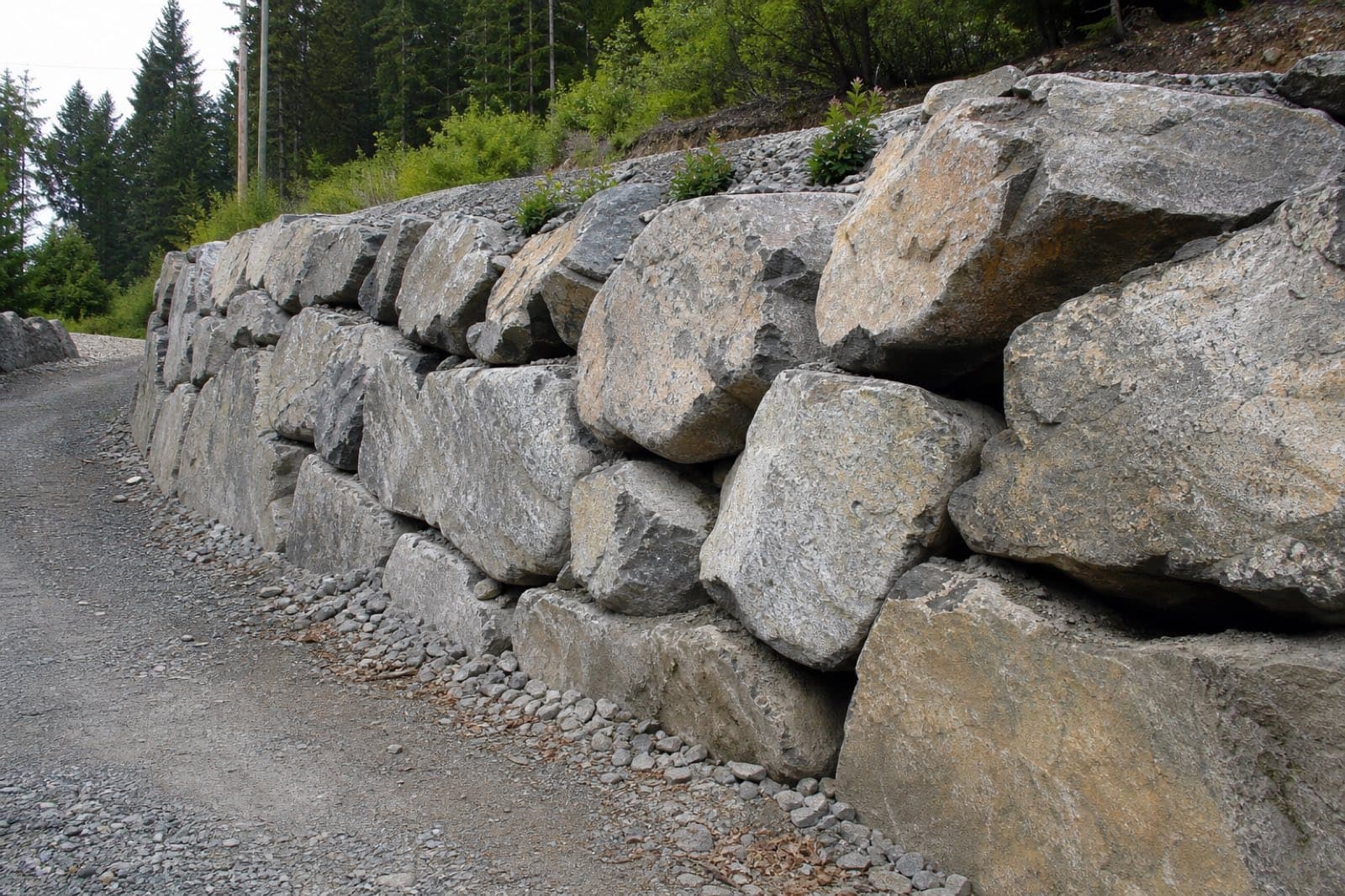
Big armour stone can hold serious grade because the mass is the structure. Reinforced block and poured concrete take height with steel and proper design. Brick and low stone walls are better under a metre unless they're built as true masonry with reinforcement. We pick the system for the height, not the other way around.
What to do if your wall is already too tall and moving
If a tall wall is leaning, cracking, or the joints are opening, don't add more block on top and hope. That's how you get a blowout. Send photos to Forge Langley Retaining Wall Contractors. We'll tell you if a drainage retrofit can save it, or if it needs to come down and go back up at a height the soil can live with.